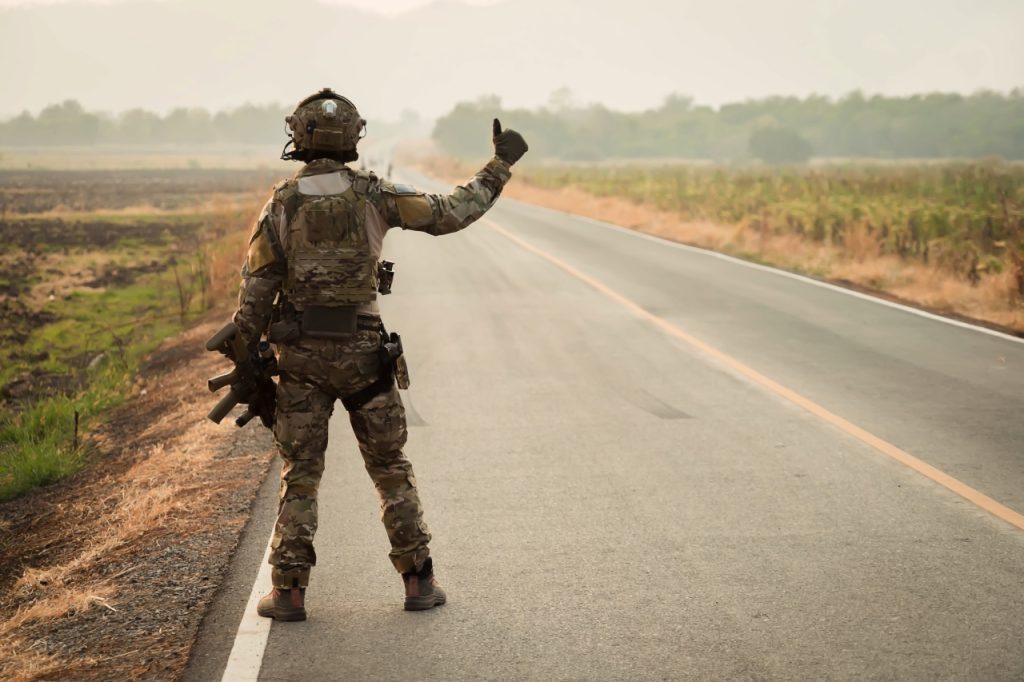
Not everyone who serves sees combat. Some never deploy. Others deploy but never fire a shot. And many who do face danger feel they didn’t see “enough” to count. It’s an invisible burden—the guilt of the warrior who trained for war but never fought it.
This is a conversation that doesn’t happen enough. Imposter syndrome in the military is real. It’s not about fraudulence—it’s about feeling like you don’t measure up to the warriors who saw the worst of war.
Let’s talk about what this guilt is, where it comes from, and how to overcome it.
1. “I Trained for War, But Never Fought”
“I feel like I’m not a real veteran.”
“I deployed, but it was quiet. Nothing happened. My buddies had it worse.”
“I trained for combat, but I never got the call. Did I even serve?”
These are words spoken by countless veterans. From infantry Marines who never left the wire to Air Force Security Forces who guarded bases that were never attacked, the feeling is the same: “Did my service even matter?”
Where does this come from?
- Comparison culture: Every war has its legends—stories of the toughest fights, the hardest missions. Warriors measure themselves against these stories and feel “less than” if they don’t match up.
- The protector’s burden: If you train for violence but never need to use it, you feel like you didn’t fulfill your purpose.
- Survivor’s guilt in a different form: Many don’t just feel guilty for coming home—they feel guilty for never having to fight at all.
2. The Brain’s Betrayal: The Psychology of Combat Guilt
Our minds play a cruel trick on us. The human brain is wired to believe that struggle = meaning. If you didn’t suffer, if you didn’t face the worst, your mind whispers: Did you really serve?
Grossman touches on this in On Combat:
“In war, you will find two great tragedies: those who endure great suffering, and those who never get the chance to prove themselves.”
Warriors don’t just want to survive—they want to be tested. When that test never comes, the mind fills in the blanks with self-doubt, misplaced guilt, and a feeling of unworthiness.
Physiologically, this is connected to dopamine and stress response systems. Combat vets often talk about the “high” of battle, followed by the struggle of coming home. But those who never fight don’t even get the high—just the comedown. The brain expected a moment of truth that never arrived, and that unresolved anticipation becomes frustration, guilt, and even shame.
3. The Cold Truth: It Was Never Your Call
Every warrior must come to terms with a brutal reality:
You don’t control the battlefield.
- You signed the contract.
- You trained.
- You were ready.
If war never came to you, that’s not a failure—it’s a fact. The outcome was never yours to decide.
Think about it:
- Is a firefighter who never sees a major fire less of a firefighter?
- Is a cop who never draws their weapon less of a protector?
- Is a medic who trains for trauma but never sees a mass casualty any less valuable?
No. Because readiness itself is the job. You didn’t fail—you stood the watch. That matters.
4. Reframing the Purpose: Your Service Wasn’t Wasted
If you’re struggling with this, reframe your purpose.
- Warriors don’t exist just to fight—they exist to be ready. The fact that you didn’t have to fight means deterrence worked, logistics worked, the system held.
- Your training wasn’t for nothing. The military isn’t just about combat; it’s about having people ready if combat comes.
- You were part of something bigger. The machine of war isn’t just trigger-pullers. It’s pilots, logisticians, mechanics, intelligence, medics, and MPs—all working together.
And if you did deploy but never saw action? That was the mission. You came home. Others came home because of you. That’s not failure—that’s success.
5. Moving Forward: Pride Without Comparison
If you’re dealing with imposter syndrome, here’s how to fight it:
Own your service. Stop waiting for someone else to validate it. You raised your hand, you swore the oath, you served. Period.
Talk to those who get it. You’re not alone. The toughest Marines, soldiers, airmen, and sailors struggle with this. Find your brothers and sisters and talk.
Focus on what’s next. Your time in uniform may be over, but your mission isn’t. Take the discipline, skills, and leadership you gained and use them.
Stop measuring yourself against others. No two warriors have the same experience. Some saw hell, some didn’t. But all were ready. That’s what matters.
Final Thought: You Were Enough. You Are Enough.
The guilt of not seeing combat is real, but it’s misplaced. The test of a warrior isn’t just whether they fought—it’s whether they were willing.
You were. And that is enough.