In today’s crowded market, brands aren’t just companies—they’re personalities. Whether you’re building a startup or managing a big business, how you craft your brand’s identity can make or break how customers perceive you. And it’s not just about what you sell. It’s about how your brand makes people feel. Like people, brands can be minimalistic or dynamic, playful or professional, and everything in between.
Let’s explore how brands take on human-like personalities, both through their product offerings and their visual identities. To keep things fun, we’re going to pair off some well-known and lesser-known brands, so you can see how different personalities and aesthetics impact success.


Basecamp vs. Monday.com – The Minimalist Manager vs. The Dynamic Collaborator
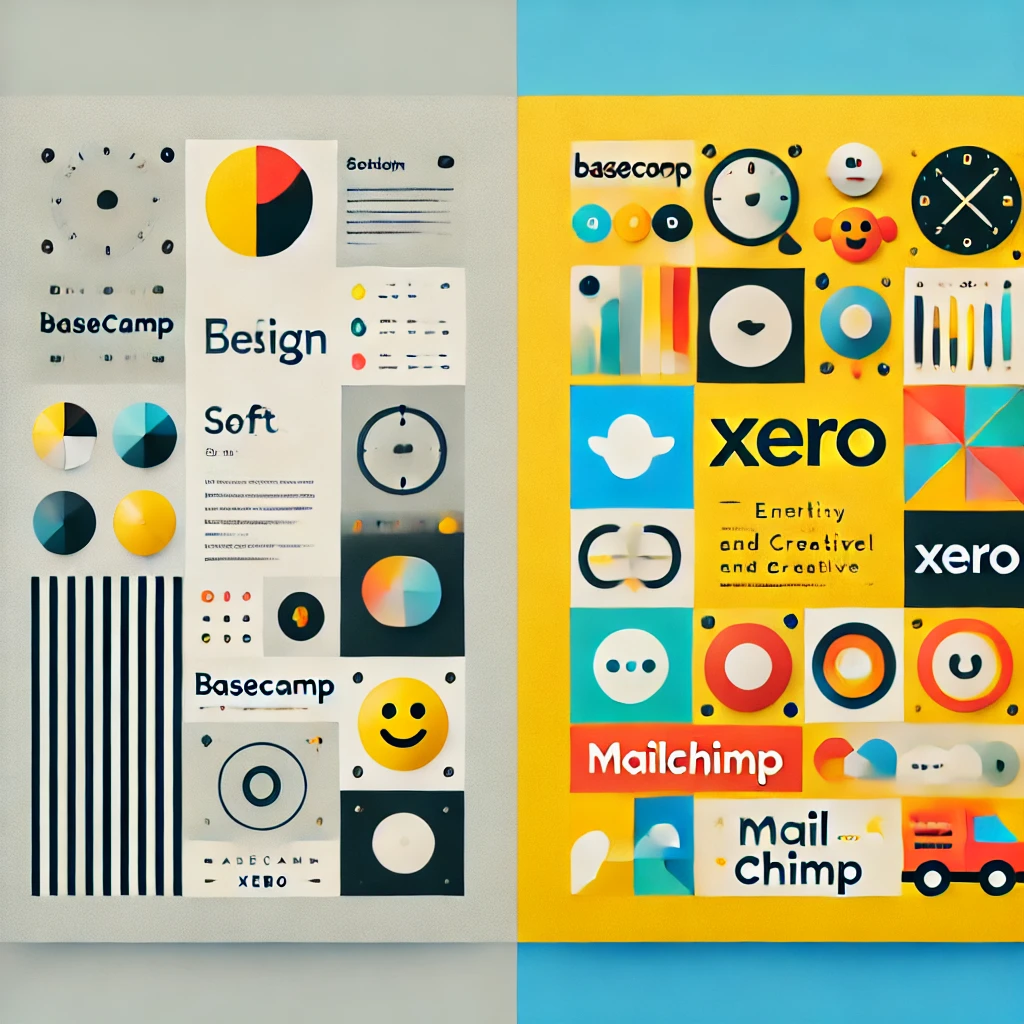
Think of these two as your friends who manage projects very differently. Basecamp is your calm, laid-back friend who cuts through the clutter to get things done efficiently. Their clean, no-frills design reflects this mindset, with soft colors and straightforward functionality. Everything is designed to simplify—no unnecessary bells and whistles.
On the other hand, Monday.com is that friend who loves to add color and energy to everything they touch. Their vibrant, visually stimulating interface is built for collaboration, with customizable boards and dynamic workflows. Monday.com’s bright reds, greens, and yellows scream energy and creativity.
Both help you manage your projects, but the real question is—do you prefer the quiet, zen-like approach of Basecamp or the high-energy collaboration of Monday.com
Mailchimp vs. ConvertKit – The Marketing Generalist vs. The Niche Expert
When it comes to email marketing, Mailchimp and ConvertKit are like two friends with very different approaches to helping you connect with your audience. Mailchimp is the friendly generalist who can do it all—email campaigns, social media ads, audience analytics, you name it. Their quirky yellow and playful chimp mascot invites users into a world of fun, approachable marketing for all.
Then there’s ConvertKit, your friend who knows exactly what they’re good at and sticks to it. They focus on serving creators—podcasters, bloggers, and course creators—offering an intuitive, focused approach to building relationships. Their minimalistic, professional design speaks directly to their niche audience, using muted colors and clean lines to say, “Let’s get serious about your audience.”
Both tools will grow your email list, but with Mailchimp, you get a jack-of-all-trades; with ConvertKit, you get a specialist.


Squarespace vs. Webflow – The Designer for All vs. The Developer’s Playground
Building a website is a lot like designing a house—Squarespace and Webflow are the architects with two very different styles.
Squarespace is a polished designer who can whip up a professional-looking website in no time. With its sleek templates, high-quality photography, and modern fonts, Squarespace gives you agency-level design without the hassle. It’s simple, elegant, and designed for anyone.
Webflow, on the other hand, is the playground for those who want more. They’re the architect who hands you the blueprints and says, “Go wild.” Their visuals are more technical and customizable, with dark, geometric designs that cater to experienced designers and developers who want full creative control.
Need something that’s plug-and-play? Squarespace has you covered. Want complete freedom and customization? Webflow is your tool.

HubSpot vs. Pipedrive – The All-in-One Marketer vs. The Focused Closer
Regarding managing customer relationships, HubSpot and Pipedrive are two very different types of salespeople.
HubSpot is the all-in-one marketer who can do it all—social media, emails, lead tracking, analytics, and more. Their vibrant orange and clean blue interface gives a welcoming, friendly vibe that appeals to growing businesses looking to scale all areas of their marketing and sales efforts.
Pipedrive, on the other hand, is the salesperson who lives to close deals. It’s simple, streamlined, and laser-focused on sales. The green and black interface is designed for efficiency, and Pipedrive users love the no-nonsense approach to getting results fast.
Both tools are great for managing customers, but if you’re looking for a marketing machine, HubSpot is your choice. If closing deals is your main focus, Pipedrive fits the bill.

Xero vs. QuickBooks – The Nimble Accountant vs. The Household Name
When it comes to accounting software, Xero and QuickBooks are like two accountants with very different styles.
Xero is a nimble accountant who works from anywhere, anytime. Their cloud-first design uses calming blues and whites, reflecting their modern, flexible, and user-friendly nature. Xero is especially loved by small businesses and startups for its simplicity and ease of use.
QuickBooks, by contrast, is the veteran accountant who has been around forever and knows every trick in the book. Their brand, dominated by green and white, feels classic and reliable. They’ve built a reputation as the go-to for businesses of all sizes, offering deeper functionality for those who need it.
Both can balance your books, but Xero is your partner if you need something sleek and modern. If you want tradition and depth, QuickBooks is the way to go.
Conclusion: Every Brand Has a Personality
Just like people, brands have personalities that impact how they’re perceived and who they attract. From the minimalist efficiency of Basecamp to the high-energy collaboration of Monday.com, from the friendly generalist of Mailchimp to the niche expertise of ConvertKit, each brand tells a story through both its product and its design.
If you’re building your brand, take a moment to think about your personality. Who are you trying to reach, and how will your design choices reflect your brand’s identity?
Want more brand comparisons like these? Follow us on Facebook and LinkedIn where we’ll be diving deeper into the personalities behind your favorite brands.